
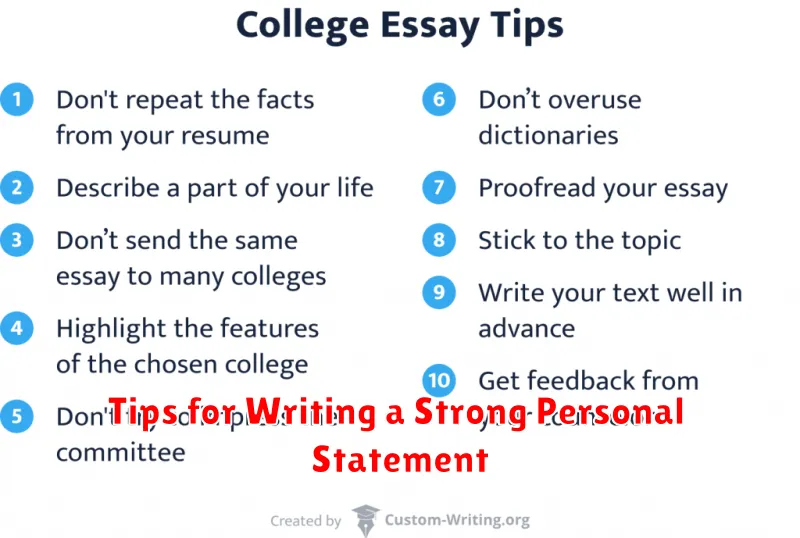
Crafting a strong personal statement is crucial for a successful application, whether you’re applying to a university, graduate program, scholarship, or job. A compelling personal statement goes beyond simply listing accomplishments; it’s an opportunity to showcase your unique personality, experiences, and aspirations to the admissions committee or potential employer. This article will provide you with essential tips for writing a personal statement that effectively highlights your strengths and leaves a lasting impression. Learn how to effectively structure your narrative, choose impactful anecdotes, and articulate your personal statement’s core message.
Discover how to make your personal statement stand out from the competition. From brainstorming and outlining to drafting and revising, we’ll guide you through each stage of the writing process. Learn how to grab the reader’s attention with a compelling opening, develop a cohesive and engaging narrative, and conclude with a powerful closing statement. By following these tips, you can transform your personal statement from a mere requirement into a powerful advocacy piece that showcases your potential and persuades the reader to invest in you. Master the art of crafting a strong personal statement and increase your chances of achieving your academic and professional goals.
Understanding the Prompt Clearly
Before you begin writing your personal statement, carefully analyze the prompt. Understanding the specific question being asked is paramount to crafting a compelling response. Don’t rush this crucial first step.
Identify keywords within the prompt. What qualities or experiences are they looking for? For example, a prompt asking about “challenges you’ve overcome” differs significantly from one asking about “leadership skills.” Tailor your response to directly address the prompt’s core focus.
If multiple prompts are offered, choose the one you can answer most effectively. The prompt should resonate with your experiences and allow you to showcase your strengths in a genuine and impactful way.
If you’re unsure about any aspect of the prompt, seek clarification. Asking questions demonstrates initiative and ensures your statement aligns with the admission committee’s expectations.
Telling Your Unique Story
A compelling personal statement hinges on your ability to tell a story that authentically represents you. This isn’t about boasting or embellishing; it’s about showcasing your individuality and how your experiences have shaped you. Reflect on what makes you unique. What are your passions, values, and motivations? What experiences have significantly impacted your personal and academic journey?
Avoid clichés and generic narratives. Don’t simply state your qualities; demonstrate them through specific anecdotes. For example, instead of stating you’re a “hard worker,” describe a time you overcame a challenging obstacle through perseverance. This allows the reader to connect with you on a deeper level and understand the depth of your character.
Consider your target audience. Tailor your narrative to resonate with the specific program or institution you’re applying to. Research their values and mission, and highlight experiences that align with their goals. This demonstrates your genuine interest and fit within their community.
Highlighting Academic and Personal Growth
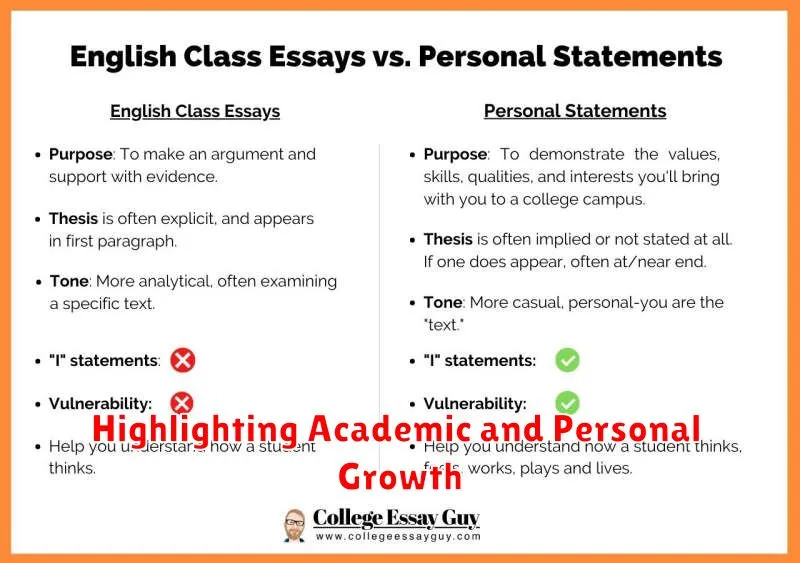
A compelling personal statement showcases both academic achievements and personal growth. Clearly articulate how your experiences, both inside and outside the classroom, have shaped you. This demonstrates maturity and self-awareness, key qualities sought by admissions committees.
When discussing academics, focus on specific instances of intellectual curiosity and growth. Did a particular course spark a new passion? Did overcoming a challenging project teach you valuable skills? Highlight these moments and explain their impact.
Similarly, showcase significant personal experiences that have contributed to your development. These experiences could include volunteer work, extracurricular activities, or overcoming personal challenges. Emphasize the skills and qualities you developed, such as leadership, teamwork, or resilience. Connect these attributes to your future goals and how they will contribute to your success in your chosen field.
Avoiding Clichés and Generalizations
Clichés weaken your personal statement by replacing genuine insights with overused phrases. They make your writing predictable and suggest a lack of original thought. Avoid common phrases like “thinking outside the box,” “making a difference,” or “from a young age.” Instead, focus on specific details and experiences unique to you.
Similarly, generalizations dilute the impact of your narrative. Statements like “I’m a hard worker” or “I’m passionate about helping people” lack the evidentiary support needed to be convincing. Replace generalizations with concrete examples that demonstrate your qualities. Show, don’t tell.
Consider replacing a clichéd phrase like “I’ve always been passionate about science” with a specific anecdote about a science project that captivated you or a mentor who inspired your curiosity. This provides concrete evidence of your passion and makes your statement more engaging and memorable.
Getting Feedback From Teachers or Mentors
Seeking feedback on your personal statement is crucial. Teachers and mentors can provide invaluable insights into your writing and help you strengthen your narrative.
Choose individuals who know you well and can speak to your strengths and abilities. These could be teachers who’ve taught you in relevant subjects, advisors who’ve guided you through extracurricular activities, or mentors who’ve supported your personal growth.
Provide them with ample time to review your statement. Clearly explain what kind of feedback you’re looking for. Do you need help with clarity, organization, or the overall impact of your essay? Be specific in your request.
Be prepared to receive constructive criticism. Remember, their goal is to help you improve. Be open to their suggestions and willing to revise your work based on their feedback. Don’t be afraid to ask clarifying questions if anything is unclear.
Editing and Proofreading for Clarity
After crafting your personal statement, dedicate ample time to editing and proofreading. Clarity is crucial. Your statement should be easily understood by the admissions committee.
Check for conciseness. Eliminate unnecessary words and phrases. Ensure each sentence contributes meaningfully to your overall narrative.
Review sentence structure. Vary your sentence length to maintain reader engagement. Avoid overly complex sentences that might obscure your meaning.
Scrutinize word choice. Use precise language to convey your experiences and aspirations effectively. Replace vague terms with stronger, more descriptive alternatives.
Proofread carefully. Errors in grammar and spelling detract from your credibility. Read your statement aloud to catch mistakes you might otherwise miss. Consider asking a trusted friend or mentor to review your final draft for a fresh perspective.
Adapting for Multiple Applications
While a core personal statement highlighting your skills and experiences is essential, adapting it for each application is crucial. Do not submit a generic statement. Each program or institution seeks specific qualities. Reviewing program details and tailoring your statement accordingly demonstrates genuine interest and increases your chances of acceptance.
Identify the key characteristics each program values. Highlight relevant experiences and tailor your narrative to demonstrate how your skills and aspirations align with their specific goals. Subtle changes can make a significant difference.
Consider creating a spreadsheet or table to organize program requirements. This allows for easy comparison and ensures you address each program’s unique aspects. Focusing your statement based on this information will showcase your suitability for each specific opportunity.
