
Are you a prospective student with a passion for groundbreaking discoveries and cutting-edge advancements? Do you dream of attending a university that fosters innovation and pushes the boundaries of research? Look no further! This article presents the top 10 universities renowned for their commitment to innovation and research, providing aspiring scholars like yourself with invaluable insights into the institutions that are shaping the future. From pioneering scientific breakthroughs to developing transformative technologies, these universities stand at the forefront of global innovation and research.
Choosing the right university is a pivotal decision for any student, especially those driven by a thirst for knowledge and a desire to contribute to the world of research. Our carefully curated list of the top 10 universities for innovation and research offers a comprehensive overview of institutions that prioritize groundbreaking work. Discover the academic powerhouses that cultivate a vibrant research environment, attract leading experts in their fields, and empower students to become the next generation of innovators. This ranking considers factors such as impactful research output, industry collaborations, and state-of-the-art facilities, providing a comprehensive guide to the leading hubs of innovation and research excellence.
Massachusetts Institute of Technology (MIT)
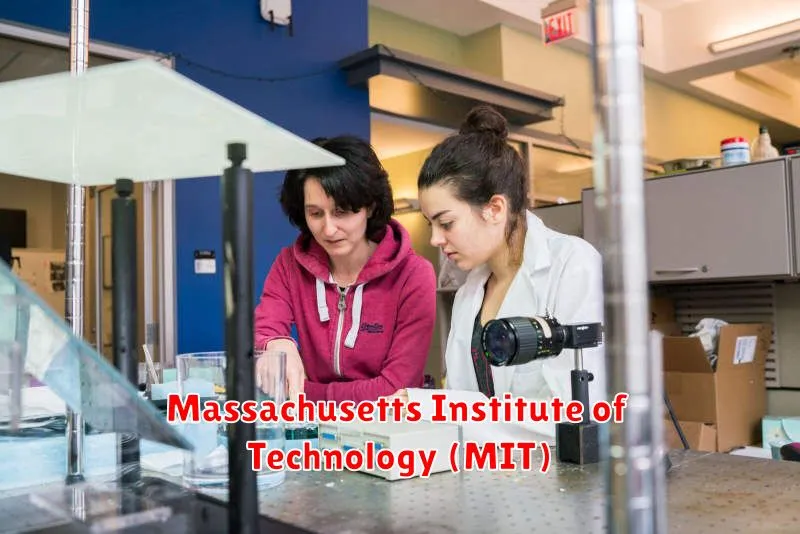
The Massachusetts Institute of Technology (MIT) consistently ranks among the top universities globally, renowned for its groundbreaking research and commitment to innovation. Located in Cambridge, Massachusetts, MIT boasts a vibrant intellectual community that fosters cutting-edge advancements across diverse fields.
MIT’s strong emphasis on STEM fields (Science, Technology, Engineering, and Mathematics) is evident in its prominent programs and research initiatives. From pioneering work in artificial intelligence and biotechnology to advancements in aerospace engineering and sustainable energy, MIT’s contributions to society are undeniable.
Key strengths of MIT include:
- World-class faculty comprised of leading experts and Nobel laureates.
- State-of-the-art facilities providing students and researchers with advanced resources.
- A culture of collaboration encouraging interdisciplinary research and innovation.
MIT’s enduring legacy of innovation continues to shape the future of technology and research.
Stanford University
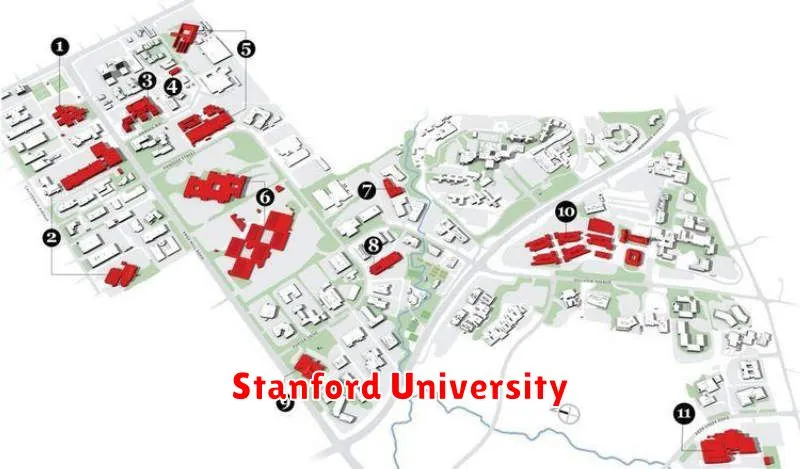
Located in the heart of Silicon Valley, Stanford University consistently ranks among the world’s leading research institutions. Its entrepreneurial spirit and strong ties to industry fuel groundbreaking discoveries and innovations across various disciplines.
Key Strengths:
- World-renowned faculty and researchers
- Cutting-edge facilities and resources
- Focus on interdisciplinary collaboration
- Strong emphasis on technology transfer and commercialization
Stanford’s contributions span fields such as computer science, engineering, medicine, and business. The university fosters a culture of innovation, encouraging students and faculty to pursue ambitious research projects with real-world impact.
Notable Research Areas:
- Artificial Intelligence
- Bioengineering
- Sustainable Energy
- Genomics
Harvard University

Established in 1636, Harvard University is the oldest institution of higher learning in the United States and consistently ranks among the most prestigious universities globally. Its commitment to groundbreaking research and innovation is evident across its numerous schools and departments.
Harvard’s influence extends across a wide range of disciplines, including law, medicine, business, and the humanities. The University’s extensive resources and world-renowned faculty attract top students and researchers from around the world, fostering a vibrant intellectual community.
Key areas of innovation at Harvard include:
- Medical advancements through its affiliated teaching hospitals and research institutes.
- Technological breakthroughs stemming from its engineering and applied sciences programs.
- Contributions to public policy and social sciences impacting global challenges.
Harvard’s endowment plays a crucial role in supporting these endeavors, enabling the university to invest significantly in cutting-edge research facilities and attract leading scholars. This focus on innovation solidifies Harvard’s position as a leader in higher education.
University of Cambridge
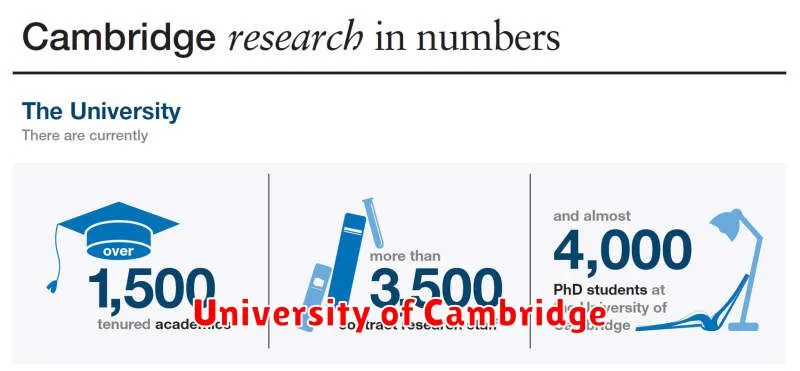
The University of Cambridge, located in Cambridge, England, consistently ranks among the top universities globally for its contributions to innovation and research. Founded in 1209, its rich history is intertwined with groundbreaking discoveries across various disciplines.
Cambridge is renowned for its collegiate system, comprising 31 constituent colleges, each with its own unique character and research strengths. This decentralized structure fosters a vibrant intellectual environment, encouraging collaboration and independent thought.
Key research areas of strength include STEM fields (Science, Technology, Engineering, and Mathematics), humanities, and social sciences. The University boasts numerous Nobel laureates, Fields Medalists, and Turing Award winners among its alumni and faculty, reflecting its commitment to cutting-edge research.
Cambridge’s impact extends beyond academia through its numerous spin-off companies and partnerships with industry, translating research discoveries into real-world applications and contributing to economic growth.
University of California, San Diego (UCSD)

The University of California, San Diego (UCSD) consistently ranks among the world’s leading research-intensive universities. A cornerstone of the San Diego innovation ecosystem, UCSD fosters groundbreaking discoveries across diverse fields.
Key strengths include programs in oceanography, biomedical engineering, and computer science. The university’s collaborative environment encourages interdisciplinary research, leading to impactful advancements.
UCSD boasts numerous prominent research centers and institutes, including the Qualcomm Institute and the Scripps Institution of Oceanography. These facilities provide state-of-the-art resources and attract top researchers and students.
Entrepreneurial initiatives are actively supported at UCSD, fostering a culture of innovation and technology transfer. This contributes significantly to the growth of the San Diego region’s dynamic economy.
University of Tokyo

Established in 1877, the University of Tokyo (Todai) consistently ranks among the top universities in Asia and globally. Its commitment to cutting-edge research across diverse disciplines makes it a powerhouse of innovation.
Todai’s extensive research facilities and highly esteemed faculty attract talented students and scholars from around the world. The university fosters a collaborative environment that encourages interdisciplinary studies and groundbreaking discoveries.
Key areas of strength include medicine, engineering, and the sciences. The University of Tokyo has produced numerous Nobel laureates and continues to be a leading contributor to advancements in various fields.
ETH Zurich

ETH Zurich (Swiss Federal Institute of Technology Zurich) consistently ranks among the world’s leading universities, particularly renowned for its programs in science and technology. Its strong emphasis on innovation and research is evident in its numerous patents and groundbreaking discoveries.
Key areas of strength include engineering, computer science, and materials science. ETH Zurich fosters a collaborative environment, encouraging interdisciplinary research and partnerships with industry. This approach translates into practical applications and real-world impact.
The university’s commitment to attracting top talent, both faculty and students, further solidifies its position as a hub for cutting-edge research and development. ETH Zurich offers state-of-the-art facilities and resources, providing a stimulating environment for intellectual exploration and innovation.
National University of Singapore (NUS)

The National University of Singapore (NUS) consistently ranks among the world’s leading universities, renowned for its cutting-edge research and innovative environment. Its multidisciplinary approach fosters collaboration across various faculties, driving impactful discoveries in fields ranging from engineering and science to business and the humanities.
NUS places a strong emphasis on experiential learning, providing students with opportunities to engage in real-world projects and industry partnerships. This focus on practical application translates into graduates well-equipped to tackle global challenges and contribute to innovation in their respective fields. The university’s strategic location in Singapore, a global hub for technology and innovation, further enhances its vibrant ecosystem.
Key strengths of NUS include its robust research infrastructure, world-class faculty, and diverse student body. These factors contribute to a dynamic learning environment where innovation thrives. The university is also committed to fostering entrepreneurship, supporting the development of start-ups and encouraging a culture of innovation and discovery.
University of Michigan

The University of Michigan consistently ranks among the top public universities in the United States and globally. Its dedication to innovation and research is evident across its diverse range of programs. A significant strength of the university lies in its extensive research infrastructure, including numerous specialized centers and institutes.
Key areas of strength include engineering, medicine, business, and law. The university’s interdisciplinary approach fosters collaboration and knowledge creation, leading to impactful discoveries and innovations.
Michigan’s commitment to research is reflected in its significant research expenditures, attracting top faculty and students from around the world. This vibrant academic environment nurtures a culture of exploration and contributes significantly to societal advancement.
California Institute of Technology (Caltech)
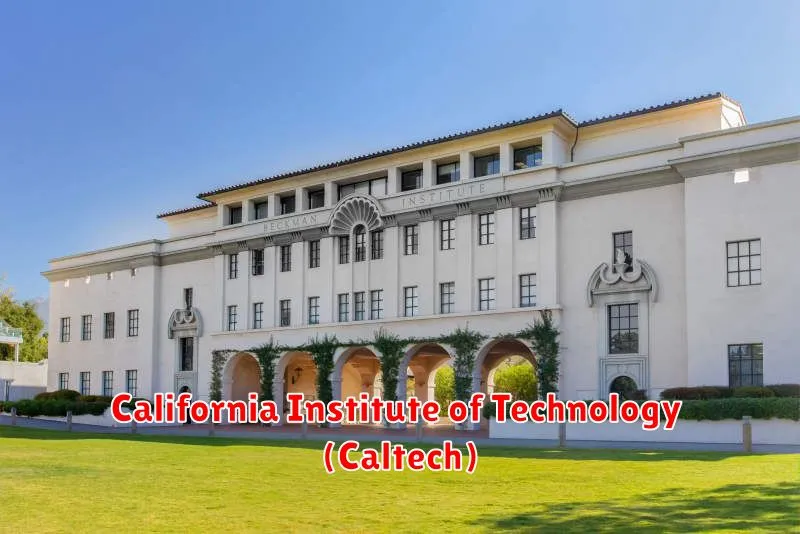
The California Institute of Technology (Caltech) consistently ranks among the world’s premier research universities. Its small size, with an undergraduate enrollment of just under 1,000 students, allows for an intensely focused research environment.
Caltech is renowned for its strengths in STEM fields, particularly physics, engineering, and chemistry. Its faculty includes numerous Nobel laureates and other distinguished scholars who are pushing the boundaries of their respective disciplines. The institution’s commitment to fundamental research is evident in its numerous groundbreaking discoveries and contributions to scientific knowledge.
Caltech’s emphasis on innovation is fostered through its close ties with industry and government agencies, including NASA’s Jet Propulsion Laboratory (JPL), which Caltech manages. This collaboration provides students with unparalleled opportunities for hands-on research experience and real-world application of their knowledge.
