
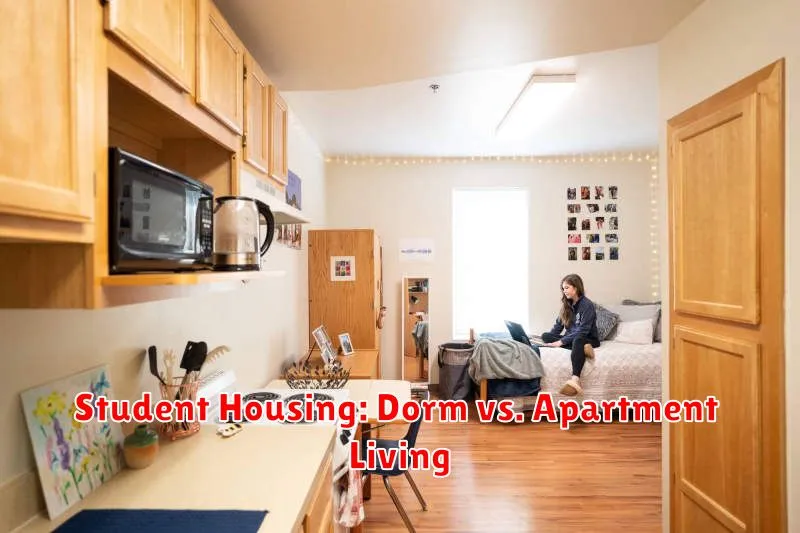
Choosing the right student housing is a pivotal decision for any college or university student. This choice significantly impacts not only your academic success but also your overall college experience. Weighing the pros and cons of dorm living versus apartment living is crucial to making an informed decision. This article will delve into the key differences between dorms and apartments, exploring factors like cost, convenience, social life, and privacy, to help you determine the best student housing option for your individual needs.
The debate of dorm vs. apartment is a perennial one among students. While dorm life offers a readily available community and convenient proximity to campus resources, apartment living provides increased independence and privacy. Understanding the nuances of each student housing option is paramount. From budgeting and meal planning to roommate dynamics and lifestyle preferences, this guide will equip you with the essential information necessary to navigate the student housing landscape and make the optimal choice for your unique circumstances.
Understanding Dormitory Lifestyle
Dormitory living offers a unique experience, characterized by shared spaces and close proximity to other students. This environment fosters a strong sense of community and provides ample opportunities for social interaction.
Room configurations typically involve shared bedrooms, often with two or more occupants, and communal bathrooms. Meal plans are frequently included, offering convenience and a structured dining schedule.
Resident advisors (RAs) are present to provide support, organize activities, and enforce dormitory rules and regulations. These rules often address quiet hours, guest policies, and prohibited items.
While dormitory living emphasizes community, it also presents challenges related to privacy and personal space. The close quarters and shared amenities require residents to be considerate and adaptable.
Advantages of Living in a Campus Dorm

Dorm living offers several benefits for students, particularly those new to university life. A primary advantage is the unparalleled convenience. Dorms are typically located on or very near campus, minimizing commute times and maximizing access to academic buildings, libraries, and other resources.
Immersion in the campus community is another significant advantage. Living amongst peers fosters a sense of belonging and provides ample opportunities for social interaction. This environment can make it easier to form friendships, study groups, and build support networks.
Dorm life also offers a structured environment, often with resident advisors (RAs) available to provide guidance and support. This can be especially helpful for students transitioning to independent living for the first time.
Cost-effectiveness can also be a benefit, as dorm fees often include utilities and sometimes meal plans, simplifying budgeting and reducing the overall financial burden on students. Furthermore, many dorms offer amenities like laundry facilities, common areas, and study spaces, adding further value and convenience.
Freedom and Responsibility in Apartments
Apartment living offers students a significant increase in freedom compared to dorm life. This includes the ability to set your own schedule, decorate as you please, and have guests over without strict regulations.
However, this freedom comes with increased responsibility. You’ll be in charge of grocery shopping, cooking, cleaning, and paying bills, including utilities like electricity and internet. You’ll also need to be mindful of noise levels and respect your neighbors’ privacy.
Furthermore, you’re responsible for the upkeep of the apartment and any damages incurred during your tenancy. Lease agreements often stipulate these responsibilities, so it’s crucial to read and understand them thoroughly before signing.
Budgeting for Rent and Utilities

A crucial aspect of both dorm and apartment living is budgeting for housing costs. For dorms, the cost is often a single, comprehensive fee covering rent, utilities, and sometimes meal plans. This makes budgeting straightforward, as you have a predictable expense.
Apartments, however, require more intricate budgeting. Rent is a separate expense, and you’ll need to account for utilities such as electricity, water, gas, and internet. These costs can fluctuate depending on usage and provider. Security deposits and other upfront fees are also common with apartments.
Creating a detailed budget is essential when considering apartment living. Factor in both fixed costs (rent) and variable costs (utilities) to accurately estimate your monthly housing expenses.
Roommate Etiquette and Communication
Sharing a living space requires consideration and open communication. Establishing clear expectations from the outset is crucial for a harmonious living environment. Discuss cleanliness standards, guest policies, quiet hours, and shared expenses early on to prevent misunderstandings.
Respect for personal space is also essential. Ask before borrowing items, and be mindful of noise levels, especially during exam periods or late at night. Address any issues promptly and respectfully. Avoid passive-aggressive behaviors like leaving notes or giving the silent treatment. Instead, engage in a direct and calm conversation to resolve conflicts.
A roommate agreement can be a valuable tool for outlining shared responsibilities and expectations. This document can serve as a reference point throughout the year and help facilitate productive conversations if conflicts arise.
Safety and Accessibility Considerations
Safety and accessibility are paramount when choosing student accommodation. Dorm living often provides 24/7 security personnel, secure access systems, and on-site resident advisors (RAs). However, shared living spaces can present challenges regarding personal belongings.
Apartments offer greater privacy and control over security measures. Students are responsible for securing their individual units and should consider factors like building security, neighborhood safety, and individual apartment features such as deadbolt locks and window security.
Regarding accessibility, both dorms and apartments offer accessible options, but availability can vary significantly. Students with disabilities should contact the housing office or landlord directly to inquire about specific accommodations and ensure their needs are met.
Choosing Based on Personal Preferences
Beyond the practical considerations, personal preferences play a significant role in deciding between dorm and apartment living. Social butterflies might thrive in the bustling environment of a dorm, with readily available social interaction and a built-in community. Those who value quiet and solitude, however, may find the constant activity of a dorm disruptive and prefer the privacy of an apartment.
Cooking enthusiasts might find the limited kitchen facilities in dorms frustrating, while those who prefer the convenience of meal plans or eating out might not mind. Similarly, students who prioritize having their own personal space and the ability to decorate and furnish their living area to their liking will likely find apartment living more appealing.
Consider your level of independence and responsibility. Dorm living often comes with more structure and support, while apartment living requires greater self-sufficiency in managing bills, groceries, and maintenance. Think about what environment best suits your personality and lifestyle to make the choice that contributes most positively to your overall college experience.
